HARD/FIRM/SOFT BOOKS:
"LEARN HARDWARE FIRMWARE AND
SOFTWARE DESIGN"
|
A. OPTION "LEARN HARDWARE FIRMWARE AND SOFTWARE DESIGN"

SPECIFICATIONS
TITLE: "LEARN HARDWARE FIRMWARE AND SOFTWARE
DESIGN"
AUTHOR: O G POPA
ISBN: 978 606 92185 32
EDITION: 5th, 2015, revised & upgraded
PAGES: 384 [WORDS: 173 901; CHARACTERS: 1 081
766]
PAGE SIZE: 10.8"X8.5" [210x265mm]
almost the "letter" format of
11"x8.5"
WEIGHT: 1.72 lb [0.780 Kg]
FORMAT: softcover, printed [glance
through LHFSD5]
SHELF PRICE [without the Source-Code]: 6500
EUR
BLUE TAG: buy LHFSD5 today for only xx EUR!
ORDERING
CODE: LHFSD5
STATUS: not
available
|
 LEARN HARDWARE FIRMWARE AND SOFTWARE DESIGN [abbreviated
LHFSD5] is a practical application guide presenting 3 actual,
ultra-important, domains: hardware, firmware, and software design.
This book has a targeted audience of "beginners", since everything
inside starts from a blank page, then it build up logically and slowly, via luxurious explanations.
Please refer to LHFSD5 Table of Contents, then
take a look inside the book.
LEARN HARDWARE FIRMWARE AND SOFTWARE DESIGN [abbreviated
LHFSD5] is a practical application guide presenting 3 actual,
ultra-important, domains: hardware, firmware, and software design.
This book has a targeted audience of "beginners", since everything
inside starts from a blank page, then it build up logically and slowly, via luxurious explanations.
Please refer to LHFSD5 Table of Contents, then
take a look inside the book.
|
B. OPTION "LEARN HARDWARE FIRMWARE AND SOFTWARE DESIGN-DOWNLOAD"

SPECIFICATIONS
TITLE: "LEARN HARDWARE FIRMWARE AND SOFTWARE DESIGN"
AUTHOR: O G POPA
ISBN: 978 606 93146 78
EDITION: 1st, 2015
PAGES: 355 [WORDS: 158 188; CHARACTERS: 982 471]
PAGE SIZE: 10.8"X8.5" [210x265mm] almost the "letter" format of 11"x8.5"
FORMAT: digital, a self-extractable WinZip folder "LHFSD5_DW.exe" (via site download)
SHELF PRICE [without the Source-Code]: 4500 EUR
BLUE TAG: buy LHFSD5-DW today for only xx EUR!
ORDERING CODE: LHFSD5-DW
STATUS: not available
|

LHFSD5-DW is the compressed downloadable version of
LHFSD5 in a digital format
(particularly useful in class teaching). In order to lower
the purchasing price of LHFSD5 to as much as possible, the digital version
LHFSD5-DW has been stripped of all additional chapters [the
non-functional ones] as follows:
A. Chapter "Little History" was
deleted.
B. All "Suggested Tasks" subchapters have been deleted. These
subchapters are important for beginners, as training practical
exercises, though they are not
mandatory.
C. All "Appendixes" have been removed, since they are not
functionally important.
In order to properly evaluate the above changes, please view
LHFSD5 TOC page. LHFSD5-DW may be easily installed on a
tower/desktop/notebook/tablet PC, or on a smartphone, running Windows,
Apple-Mac, Linux, or Android. Now, although the downloadable version is cheaper than the printed
one, and a lot more comfortable/convenient to work with, you need to be aware that
it comes with a few limitations, as follows:
A. LHFSD5-DW may be used only for personal
educational needs, and for (direct/personal) class/tutoring activities.
Reselling this file, "sharing" it, or simply displaying
parts of its content on Internet pages is strictly prohibited.
B. The digital format of LHFSD5-DW [*.exe; *.tif]
is not
negotiable. However, rest assured that LHFSD5-DW may be opened in any OS (on
smart phones, tablets, PCs) without additional software. [Printing
resolution is set at 300 dpi, which is quite sufficient for viewing
on screen, and even for printing on paper.]
C. File LHFSD5-DW.exe may be downloaded a single time,
though this may be executed for only as long as physical stocks of LHFSD5 should
last. Once the stock of LHFSD5 is depleted, LHFSD5-DW version also will cease to exist.
|
C. OPTION "SOURCE CODE
ED5RV07EN-15"
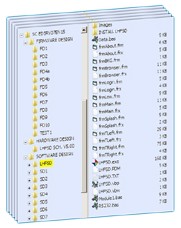
SPECIFICATIONS
TITLE: "SOURCE CODE ED5RV07EN-15"
AUTHOR: O G POPA
FORMAT: digital, a self-extractable WinZip package named "ED05RV07EN_15.exe"
(via site download)
SHELF
PRICE: 1500
EUR
BLUE TAG: buy SC ED5RV07EN-15 today for
only xx EUR!
ORDERING CODE: SC ED5RV07EN-15
STATUS: not available
|
 The Source Code package SC ED5RV07EN-15 is not compatible with
any of the previous editions of LHFSD. In other words, in order to
work with ED5RV07EN_15, the 5th edition of LHFSD (in print or as a folder
download) is mandatory. Consequently, SC ED5RV07EN-15 is not sold
separately; it is purchased (only) together with LHFSD5, or with
LHFSD5-DW. The Source Code package SC ED5RV07EN-15 is not compatible with
any of the previous editions of LHFSD. In other words, in order to
work with ED5RV07EN_15, the 5th edition of LHFSD (in print or as a folder
download) is mandatory. Consequently, SC ED5RV07EN-15 is not sold
separately; it is purchased (only) together with LHFSD5, or with
LHFSD5-DW.
|
|
The Source Code SC ED5RV07EN_15 [working with LHFSD5 only] is
A PRICELESS PRACTICAL KNOWLEDGE for future
hardware/firmware/software developers. Note that all HFS projects are modular, therefore you can work (or not) with
parts of them at a time!
As a marginal note, the entire Source Code ED5RV07EN_15 is richly commented on each and every
single line of code!
|
ATTENTION
All the books presented in this page cannot
be purchased, since all our stocks are depleted. Even worse, we cannot
afford to repopulate the stocks because the publishing costs are
way, way too great. Sorry about this.
|
|

|
|
|
|

